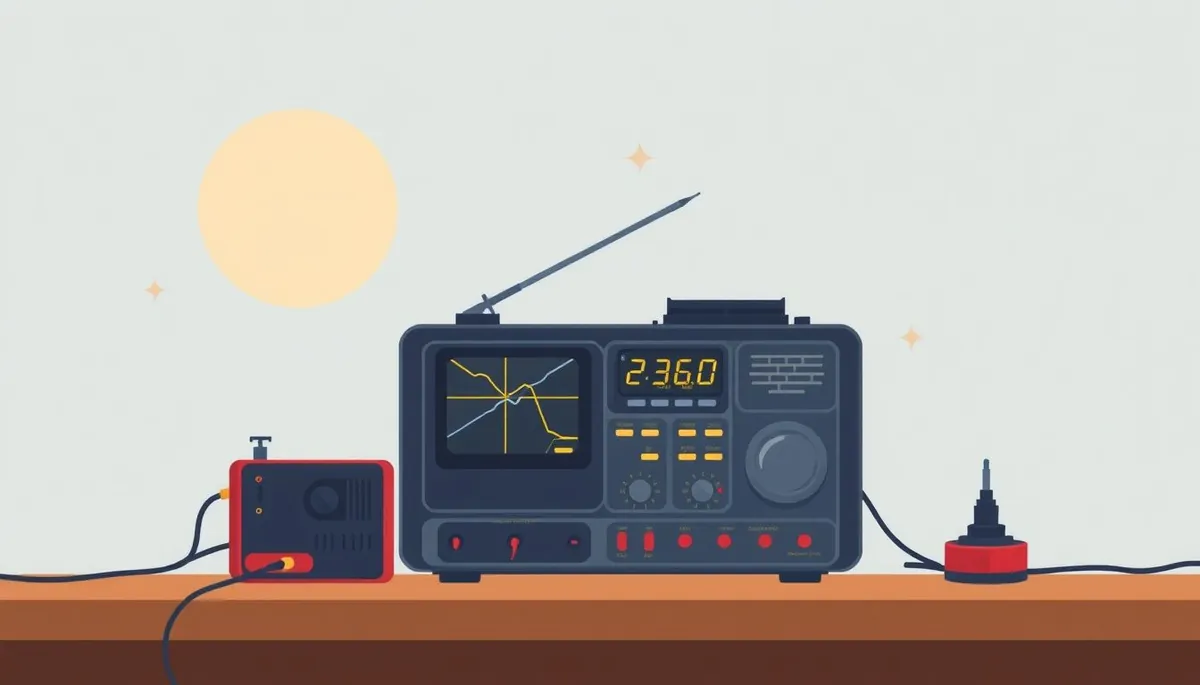
Ham radio can seem like a complex world of regulations, frequencies, and equipment, which often deters electronics hobbyists from jumping in. If you’re curious about integrating ham radio into your projects but don’t know where to start, this 10-hour starter path breaks down the essential steps, tools, and learning goals to get you transmitting and receiving confidently—without drowning in jargon or expensive gear.
What Is Ham Radio for the Electronics Hobbyist?
Phone cases · Sponsored
Phone Cases For All — 50,000+ designs. 15% off code FIRST15ALL
Ham radio (amateur radio) is a popular way for electronics enthusiasts to experiment with communication technologies, radio frequency circuits, antenna design, and digital signal processing. For hobbyists, it’s more than just chatting on the airwaves—it’s a hands-on learning platform for RF electronics, propagation physics, and practical problem-solving.
Unlike commercial or licensed communication systems requiring specialized infrastructure, ham radio lets you build, customize, and operate your own radio stations. It’s especially appealing for those who enjoy kit-building, DIY antenna construction, and tinkering with microcontrollers or SDR (Software Defined Radio).
See also: 34. 555 timer projects that still teach well in 2026
How Ham Radio Works in a Nutshell
At its core, ham radio involves forming two-way radio communication links over various frequencies and modes. Operators use transceivers (combined transmit/receive radios) to send and receive signals—voice, Morse code, digital data, or even images.
You’ll work primarily in the shortwave (HF), very high frequency (VHF), and ultra high frequency (UHF) bands, each with distinct propagation characteristics. HF bands can get you global contacts during favorable atmospheric conditions. VHF/UHF are ideal for local communications or satellite operations.
Transmission range depends on frequency, power output, antenna design, and atmospheric conditions—so it’s a playground for practical RF experiments.
When Should an Electronics Hobbyist Try Ham Radio?
Phone cases · Sponsored
Phone Cases For All — 50,000+ designs. 15% off code FIRST15ALL
If you are:
- Interested in wireless communication beyond Wi-Fi/Bluetooth
- Curious about RF circuit design, antenna tuning, and signal propagation
- Looking for an accessible way to apply microcontrollers, DSP, or SDR skills
- Wanting to join a community of like-minded experimenters
- Wanting a leg-up in understanding signal integrity and electromagnetic compatibility (EMC)
Ham radio fits these goals perfectly. However, avoid treating it like a “plug-and-play” gadget. The learning curve is mostly about gaining knowledge on radio regulations and operating practices, then matching that with gear and hands-on practice.
How to Get Started in 10 Hours: A Practical Path
Dividing your initial learning into bite-sized, focused activities saves frustration and helps avoid common pitfalls. Here’s a suggested schedule combining study, equipment setup, and on-air practice.
Hour 1-2: Understand the Basics and Licensing Requirements
- Learn what ham radio is, operating modes (FM, SSB voice, CW Morse, digital like FT8).
- Review your country’s licensing classes and exam content—most places require a test to access frequencies legally.
- Identify the lowest-cost license tier for newcomers. Many countries offer beginner-friendly entry licenses.
- Resources: government licensing websites, amateur radio clubs, free online practice exams.
Hour 3: Acquire Entry-Level Equipment
- Start small with a simple handheld transceiver (HT) covering 2m/70cm VHF/UHF bands.
- For bench experimentation, consider a basic HF kit or SDR dongle for receiving shortwave.
- Focus on options with good oscillator stability and clear frequency readout for easier tuning.
- Avoid expensive multi-band rigs at this point. Simple gear gets you on air fast and shows you what features matter.
Hour 4–5: Learn Antenna Basics and Setup
- Build or buy a basic quarter-wave vertical or dipole antenna for your primary bands.
- Understand antenna tuning and SWR (standing wave ratio) measurement—key to efficient transmission and protecting your radio.
- Practice using an SWR meter or software-based analyzers, if available.
Hour 6: Study Operating Procedures and Etiquette
- Grasp the phonetic alphabet, Q-codes (standard abbreviations), and call sign formats.
- Learn how to initiate and respond to a contact (QSO).
- Review rules about transmission power, forbidden content, and emergency communication priorities.
- Many radio clubs offer mentor sessions or nets (scheduled group chats) ideal for newcomers.
Hour 7–8: Make Your First Contact
- Power on your HT, tune to a local repeater or simplex frequency.
- Listen before transmitting—let others finish their conversations.
- Announce your call sign clearly and wait for a response.
- Log contacts in a notebook or software.
Hour 9: Explore Digital Modes and Logging
- Experiment with digital modes like FT8 using a computer sound card interface or SDR.
- Digital modes require minimal power and perform well in noisy conditions—great for hobbyists who enjoy software tools.
- Familiarize yourself with logging software to track your QSOs, aiding contest participation or awards.
Hour 10: Reflect and Plan Next Steps
- Evaluate what you enjoyed: DIY antenna projects, radio assembly, digital modes, on-air chatting, or signal decoding.
- Join a local amateur radio club or online forums to connect with peers.
- Plan equipment upgrades, like add-on power amplifiers, multi-band antennas, or advanced SDR units.
- Consider learning Morse code (still valuable, low-power) or certificate extensions for advanced licenses.
Practical Equipment Overview: Handheld HT vs. Kit-Built HF Transceiver vs. SDR Receiver
Phone cases · Sponsored
Phone Cases For All — 50,000+ designs. 15% off code FIRST15ALL
| Feature / Use Case | Handheld VHF/UHF HT | DIY HF Transceiver Kit | SDR Receiver (USB Dongle) |
|---|---|---|---|
| Frequency Coverage | Mostly VHF/UHF (144/440 MHz) | HF bands (1.8–30 MHz) | Wideband (100 kHz to 1.7 GHz+) |
| Transmission Capability | Yes, low to moderate power (5W typical) | Yes, moderate power (5-10W) | Usually receive-only |
| Portability | Highly portable, integrated battery | Portable, requires external power | Requires computer, portable with laptop |
| Hands-on Learning | Basic antenna tuning | Circuit assembly, soldering, tuning | RF signal analysis, demodulation |
| Ideal For | Local QSO, repeaters, emergency comms | Global QSO, DIY electronics hobbyists | Listening, propagation study, digital decoding |
| Cost | Low to moderate | Moderate | Low |
| Complexity | Low | Moderate | Moderate to high |
| Common Pitfalls | Limited band coverage, battery life | Assembly errors, antenna mismatch | Computer software setup complexity |
Common Pitfalls for Beginners and How to Avoid Them
- Skipping licensing: Operating without a license can lead to fines. Invest time upfront to pass your entry exam.
- Overbuying gear: Resist the urge to buy expensive rigs before knowing what bands or modes you prefer.
- Neglecting antenna tuning: Even the best radio will underperform if antenna SWR isn’t optimized.
- Failing to listen first: On crowded airwaves, practice patience and awareness before transmitting.
- Ignoring documentation: Study the manuals and operating guides—many beginners struggle because they overlook this basic step.
Tools That Make a Difference
- Soldering Station: Choose one with precise temperature control and easy tip swaps for building and repairing kits.
- Oscilloscope: Getting a beginner-friendly 20-50 MHz scope can help you see RF waveforms and transient behavior during radio experiments.
- Frequency Counter or Antenna Analyzer: Useful to measure oscillation frequency and antenna resonance.
- Logging Software: Digital logs ease contest work and earning amateur radio awards.
These tools enhance your effectiveness and enjoyment in ham radio projects.
Frequently Asked Questions
Q: Do I need a license to start experimenting with ham radio?
A: Yes, most countries require an amateur radio license before legal transmission. Listening is allowed without a license.
Q: Can I use my ham radio gear for other electronics projects?
A: Absolutely—many components like antennas, filters, and oscillators have broad applications in RF and digital experimentation.
Q: How much does it cost to start ham radio as a hobby?
A: Entry can be as low as $100-$200 for a basic handheld and antenna, plus licensing fees. Building your own transceiver kits or SDRs varies widely but can be budget-friendly.
Our picks worth a closer look
- Amazon Basics AA Performance Alkaline Batteries, 48-CountCheck on Amazon → — see current price and specs.
- Dawn Ultra Dish Soap, Original Scent, 75 fl oz (2-Pack)Check on Amazon → — see current price and specs.
- Scott 1000 Sheets Per Roll Toilet Paper, 36 RollsCheck on Amazon → — see current price and specs.
- Hakko FX-888D Digital Soldering Station with FX-8801 TipCheck on Amazon → — see current price and specs.
- Tide PODS Laundry Detergent Soap Pods, Original Scent, 112 CountCheck on Amazon → — see current price and specs.
