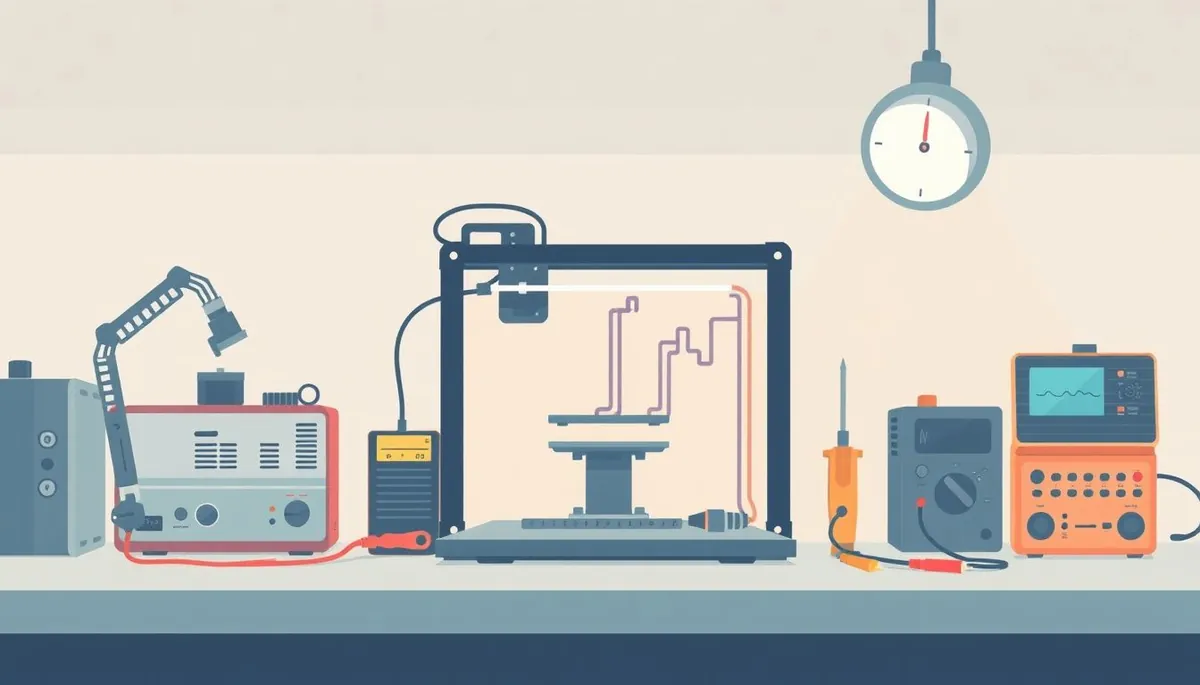
When your 3D printed parts don’t match the exact dimensions specified in your CAD models, it causes fit issues, assembly headaches, and unreliable prototypes. Achieving dimensional accuracy within spec requires more than just pressing print—it takes careful tuning of your printer’s hardware, firmware, slicing settings, and calibration procedures. This guide walks through the practical steps to tune your 3D printer for real-world accuracy that you can rely on.
What Is Dimensional Accuracy in 3D Printing?
Phone cases · Sponsored
Phone Cases For All — 50,000+ designs. 15% off code FIRST15ALL
Dimensional accuracy refers to how closely the physical measurements of a printed object match the intended dimensions designed in your CAD or slicing software. High dimensional accuracy ensures that mating parts fit together properly, mechanical functions work as designed, and the final product meets quality standards. Accuracy is typically measured as a percentage of deviation or in absolute units such as millimeters.
Common targets for hobbyist and professional printers range from ±0.1 mm to ±0.3 mm depending on the application, printer type, and material.
How Dimensional Inaccuracy Arises
Several factors can cause a printed part to deviate from specified dimensions:
- Mechanical slack and belt tension: Loose belts or worn components introduce backlash that affects movement precision.
- Incorrect stepper motor calibration: Steps per millimeter must be correctly set for each axis to ensure accurate movement.
- Thermal expansion: Heated elements such as the hotend and heated bed expand and contract, causing size variation.
- Slicer settings: Layer height, extrusion multiplier, flow rate, and print speed influence accuracy.
- Filament properties: Filament diameter inconsistencies and shrinkage, especially with ABS or other high temp plastics.
- Printer frame rigidity: Any wobble or vibration can distort layers and fine details.
How to Tune Your 3D Printer for Dimensional Accuracy
Phone cases · Sponsored
Phone Cases For All — 50,000+ designs. 15% off code FIRST15ALLFollow these steps to methodically dial in your printer’s accuracy:
Step 1: Mechanical Inspection and Adjustment
- Check belt tension and pulleys for tightness but not over-tight.
- Lubricate rods and clean rails to ensure smooth movement.
- Tighten all screws and frames to reduce wobble.
- Inspect your Z-axis leadscrews or couplers for play or wear.
Step 2: Calibrate Steps per Millimeter (Steps/mm)
- Using a dial caliper, measure the actual travel compared to commanded travel on each axis.
- Adjust firmware steps/mm settings to correct discrepancies.
- Repeat until the measured movement matches the desired movement within at least 0.1 mm.
Step 3: Check and Calibrate Extruder E-steps
- Over- or under-extrusion affects dimensional accuracy, especially for outer walls.
- Mark 100mm of filament, extrude that length, measure remaining filament, and correct E-steps accordingly.
Step 4: Tune Flow Rate and Extrusion Multiplier
- Start with manufacturer recommended values.
- Print single-wall calibration cubes and measure wall thickness.
- Adjust extrusion multiplier until actual thickness matches slicer settings.
Step 5: Optimize Printing Temperature and Cooling
- High temperature can cause excessive filament flow or oozing, shrinking after cooling.
- Print temperature towers and cooling fans settings to find the best balance.
Step 6: Adjust Slicer Settings for Dimensional Precision
- Use smaller layer heights (e.g., 0.1 – 0.15 mm) for better detail.
- Tune print speeds: slower prints increase accuracy.
- Enable retraction to reduce stringing and blobbing.
- Consider enabling “horizontal expansion” or “shell compensation” if slicer supports it.
Step 7: Consider Material-Specific Compensation
- Factor in filament shrinkage rates by measuring prints then adjusting model scale or slicer compensation.
- Use manufacturer’s datasheets for recommended print settings and expected shrinkage.
Step 8: Verify with Test Prints
Print standardized calibration models such as:
- Calibration cubes (e.g., 20x20x20 mm)
- Tolerance tests (e.g., peg and hole fits)
- Overhang and bridging tests for dimensional consistency across features
Measure key dimensions with calipers and compare with specs.
Common Pitfalls and How to Avoid Them
- Ignoring filament diameter variance: Always measure filament diameter at multiple points and update slicer accordingly.
- Relying only on visual inspection: Accuracy requires precise measurement tools such as digital calipers.
- Skipping mechanical checks: Software calibration cannot fix hardware issues like loose belts or frame issues.
- Not calibrating extruder steps: Over-extrusion causes swelling that changes dimensions.
- Using default slicer settings blindly: Customization based on printer and filament is essential.
Comparison Table: Key 3D Printer Adjustments for Dimensional Accuracy
Phone cases · Sponsored
Phone Cases For All — 50,000+ designs. 15% off code FIRST15ALL
| Adjustment Area | Impact on Accuracy | Tools Needed | Difficulty Level | When to Use |
|---|---|---|---|---|
| Mechanical - belts & frames | Reduces backlash and wobble | Wrenches, tension gauges | Moderate | Before calibration, ongoing maintenance |
| Steps/mm calibration | Corrects axis movement scaling | Dial calipers, firmware access | Moderate | Initial setup and after hardware changes |
| Extruder calibration | Prevents over-/under-extrusion | Markers, calipers | Easy | Regularly, especially when changing filament |
| Flow rate adjustment | Fine-tunes wall thickness | Calipers, test prints | Easy | After extruder calibration |
| Print temperature tuning | Minimizes thermal deformation | Temperature towers | Moderate | When changing filament type |
| Slicer settings tuning | Improves feature fidelity | Slicer software | Easy to moderate | Anytime, recommended after hardware tuning |
When Do You Need to Tune for Dimensional Accuracy?
- You require parts to fit precisely, e.g., mechanical assemblies, snap fits, or tooling.
- You notice consistent over- or under-sizing in parts even after adjusting slicer dimensions.
- Switching to new filament or changing environmental conditions like ambient temperature.
- Upgrading or changing hardware components (new hotend, belts, or extruders).
- Preparing for production runs where consistency is key.
When Less Tuning Is Acceptable
- Non-functional decorative prints.
- Rapid prototyping where minor deviations do not affect outcomes.
- Large parts where dimensional tolerance is forgiving.
Frequently Asked Questions
Q: How often should I recalibrate steps per millimeter?
A: Recalibrate after mechanical maintenance, changing belts, or if you notice drift in part dimensions. For stable setups, this can be every few months.
Q: Can I fully eliminate dimensional errors with tuning?
A: No 3D printer is perfect; good tuning can reduce errors down to ±0.1 mm or better but some variability remains due to material and mechanical limits.
Q: Does filament brand affect dimensional accuracy?
A: Yes, filament diameter consistency and shrinkage behavior vary by brand and batch, impacting the final dimensions. Always measure and adjust slicer settings accordingly.
By working through mechanical, firmware, extruder, temperature, and slicer adjustments in a systematic way, you can significantly improve your 3D printer’s dimensional accuracy. This brings your printed parts reliably within spec, enabling smoother assembly, functional prototypes, and greater confidence in your prints.
Our picks worth a closer look
- Dawn Ultra Dish Soap, Original Scent, 75 fl oz (2-Pack)Check on Amazon → — see current price and specs.
- Scott 1000 Sheets Per Roll Toilet Paper, 36 RollsCheck on Amazon → — see current price and specs.
- Amazon Basics AA Performance Alkaline Batteries, 48-CountCheck on Amazon → — see current price and specs.
- Tide PODS Laundry Detergent Soap Pods, Original Scent, 112 CountCheck on Amazon → — see current price and specs.
