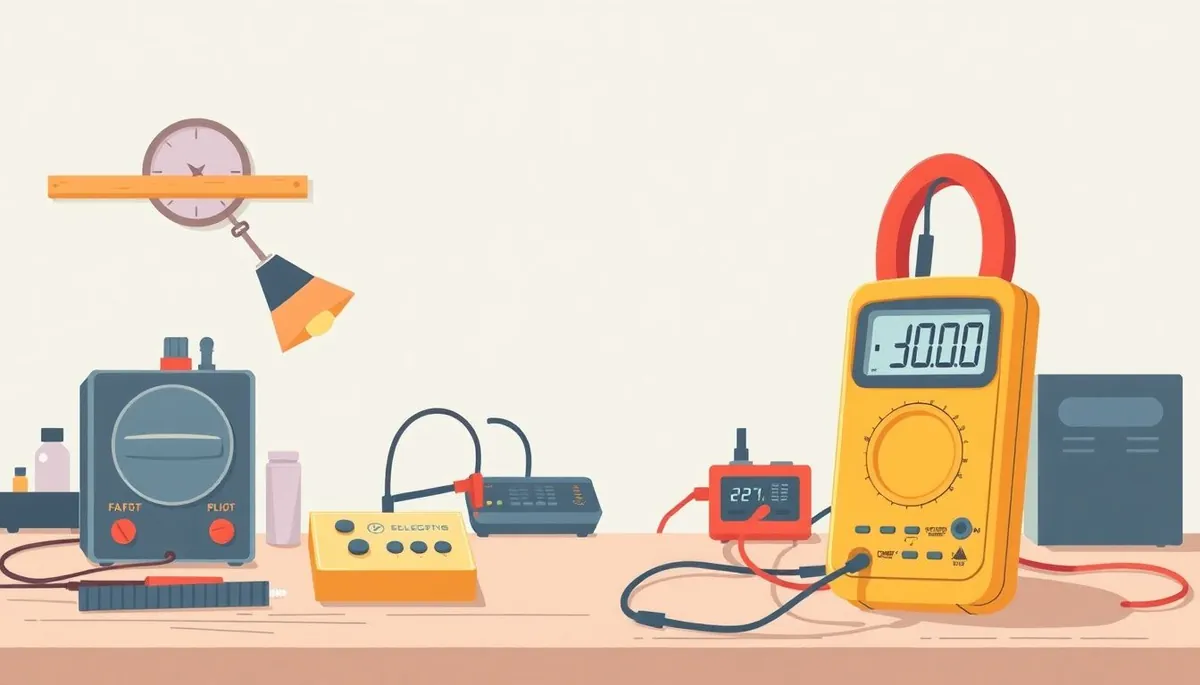
Current measurement is a fundamental task for electronics hobbyists and bench technicians, but it can be risky: measuring current the wrong way often blows fuses in your multimeter or damages your equipment. This article addresses how you can measure current safely and accurately—without blowing a fuse—using a clamp meter. We’ll focus on practical, realistic advice for makers and technicians, considering tool precision, clamp meter specifications versus price, and what features matter most to beginners versus experienced users.
What Is Current Measurement and Why Is Blowing a Fuse a Concern?
Phone cases · Sponsored
Phone Cases For All — 50,000+ designs. 15% off code FIRST15ALL
Current measurement means determining how much electric current flows through a circuit. Unlike voltage, which you can measure across components, current measurement usually requires inserting a meter in series with the circuit. This interrupts the current path and exposes the meter and its internal fuse to the circuit’s current flow.
When you connect a multimeter to measure current directly, the meter’s internal fuse protects the device by blowing if the current exceeds the meter’s rating. While the fuse protects your meter and potentially the circuit, replacing blown fuses is inconvenient and can slow down troubleshooting or prototyping.
A clamp meter eliminates the need to cut or disconnect the circuit for current measurement, thereby avoiding the risk of blowing fuses due to incorrect connections or unexpected current spikes.
How Does a Clamp Meter Measure Current?
A clamp meter measures current by detecting the magnetic field generated by the current flowing through a conductor. Its jaws open and clamp around a single wire or conductor without physical contact with the conductor’s metal part.
How It Works in Detail:
- Magnetic Core and Sensor: The clamp contains a magnetic core that encircles the wire. Current flowing through the wire generates a magnetic field around it.
- Inductive Coil: The magnetic field induces a current or voltage in a coil within the clamp’s core proportional to the current in the conductor.
- Signal Conversion and Display: Electronics inside the clamp meter convert this induced signal into a current reading, displayed on the meter’s screen.
- True RMS vs Average Responding: Higher-end clamp meters measure true RMS values, which provide accurate readings regardless of waveform shapes common in electronics and power tools.
Because it does not require circuit interruption or series connection, the clamp meter protects the user and the equipment from fuse-blowing mistakes.
When Should You Use a Clamp Meter for Current Measurement?
Phone cases · Sponsored
Phone Cases For All — 50,000+ designs. 15% off code FIRST15ALL
Clamp meters are ideal for:
- Non-invasive testing of AC currents. By far the most common use case is measuring alternating current (AC) in mains wiring, appliances, or power supplies.
- Quick diagnostic checks. If you need to check whether current is flowing without disconnecting anything.
- High current measurements. Clamp meters typically measure much higher currents than handheld multimeters designed for in-line measurement (tens or hundreds of amps).
- When you want to preserve continuity. Since no series connection or breaking the circuit is needed, device operation is uninterrupted.
- Field and panel work. Clamp meters are handy for electricians, maintenance techs, and makers needing to troubleshoot power lines.
However:
- Clamp meters require the conductor to be isolated (one wire), so they don’t work well with cables containing multiple conductors or shielded wires unless you separate a single conductor.
- Most basic clamp meters measure only AC current or only low DC current.
- Precision varies with meter sensitivity and jaw design.
Common Pitfalls When Using a Clamp Meter
Understanding clamp meter limitations helps avoid inaccurate readings and frustration.
- Measuring Multi-Conductor Cables: Clamping around an entire cable carrying positive and return currents yields near-zero measurement because magnetic fields cancel out.
- Poor Jaw Closure: Ensure jaws fully close around the conductor for reliable magnetic coupling.
- Incorrect Wire Isolation: Placing the clamp over multiple wires or twisting wires together causes measurement errors.
- Low Current Accuracy: Entry-level clamp meters often can’t measure currents below 1 A accurately.
- DC Clamp Meter Limitations: DC current clamps require Hall-effect sensors and tend to be pricier with limited maximum current range.
- Improper Use with High-Frequency Currents: Some clamp meters don’t measure well on PWM signals or other high-frequency switching currents without true RMS sensing.
How to Safely Measure Current Without Blowing a Fuse Using a Clamp Meter
Phone cases · Sponsored
Phone Cases For All — 50,000+ designs. 15% off code FIRST15ALL
Step 1: Identify the Conductor to Test
Find a single isolated wire carrying the current you need to measure. Split cables or use test points if available.
Step 2: Select a Suitable Clamp Meter
- For AC mains or typical household current, a basic AC clamp meter suffices.
- For DC current measurement, choose a clamp meter with Hall-effect sensors and DC measurement rating.
- Select a meter with appropriate current range and minimum resolution for your application to maximize accuracy.
Step 3: Zero the Meter (If Applicable)
Some clamp meters have a zero or relative mode to cancel residual magnetic fields or offset. Use this feature to improve measurement accuracy.
Step 4: Open Clamp Jaws and Enclose the Single Conductor
Make sure only one wire passes inside the clamp. Close the jaws fully, ensuring good magnetic coupling.
Step 5: Read the Current on the Display
Check units (amperes AC or DC) and note the reading. For fluctuating signals, observe the meter’s response time and consider true RMS meters for accuracy.
Step 6: Repeat for Different Circuits as Needed
No circuit interruption is needed; you can swiftly check multiple wires.
Comparison of Clamp Meter Features: What Beginners Need vs Advanced Users
| Feature | Basic Clamp Meter | Mid-Range Clamp Meter | Advanced Clamp Meter | Scenario/Use Case |
|---|---|---|---|---|
| AC Current Range | Up to 400 A | Up to 600 A | Up to 1000 A or more | Household, automotive, industrial mains |
| DC Current Capability | Usually no or very limited | Usually up to 100 A | High accuracy DC up to 1000 A+ | Battery systems, electronics, solar installations |
| Resolution | ~1 A | 0.1 A | 0.01 A or better | Electronics prototyping, low current measurements |
| True RMS | Often no | Usually yes | Yes | Accurate readings on complex waveforms |
| Jaw Size | Small (~20-30 mm) | Medium (30-35 mm) | Large (35+ mm) | Access to larger conductors |
| Display Type | Basic LCD | Backlit LCD | Color/TFT, data logging | Workshop and field use |
| Price Range | $20-$50 | $50-$150 | $150+ | Budget vs professional-level |
What Beginners Actually Need
Many beginners are tempted by meters with every feature, but that’s often unnecessary for standard bench and light field work. A basic AC clamp meter with true RMS and medium jaw size can handle most home or kit electronics power lines with no risk of blowing fuses and reasonable accuracy.
Maintaining Your Clamp Meter: Tips to Prolong Life and Accuracy
- Keep jaws clean and free of debris for solid contact.
- Store the meter in a protective case to prevent jaw misalignment.
- Avoid dropping or rough handling that can affect sensor calibration.
- Check zero function regularly and recalibrate if possible.
- Use compatible batteries and replace them timely to maintain display and sensor performance.
Summary
Measuring current without blowing a fuse is primarily about using the right tool and technique. A clamp meter provides a safe, fast, and non-invasive alternative to inline current measurement. Understanding your meter’s specifications, limitations, and proper handling will keep your troubleshooting efficient and your tools intact.
Frequently Asked Questions
Q: Can I measure DC current with any clamp meter?
A: No. Only clamp meters with Hall-effect sensors are designed for DC current measurement. Most basic or budget units only measure AC current.
Q: What if the cable has multiple wires? Can I clamp the whole cable?
A: No, clamping multiple conductors together typically results in canceling magnetic fields and a near-zero reading. Separate or isolate the conductor you want to measure.
Q: How can I avoid getting inaccurate readings with a clamp meter?
A: Make sure the clamp jaws fully close, only enclose one conductor, use zeroing/relative mode if available, and use a true RMS meter for non-sinusoidal waveforms.
Our picks worth a closer look
- Dawn Ultra Dish Soap, Original Scent, 75 fl oz (2-Pack)Check on Amazon → — see current price and specs.
- Scott 1000 Sheets Per Roll Toilet Paper, 36 RollsCheck on Amazon → — see current price and specs.
- Amazon Basics AA Performance Alkaline Batteries, 48-CountCheck on Amazon → — see current price and specs.
- Tide PODS Laundry Detergent Soap Pods, Original Scent, 112 CountCheck on Amazon → — see current price and specs.
